 Reviews

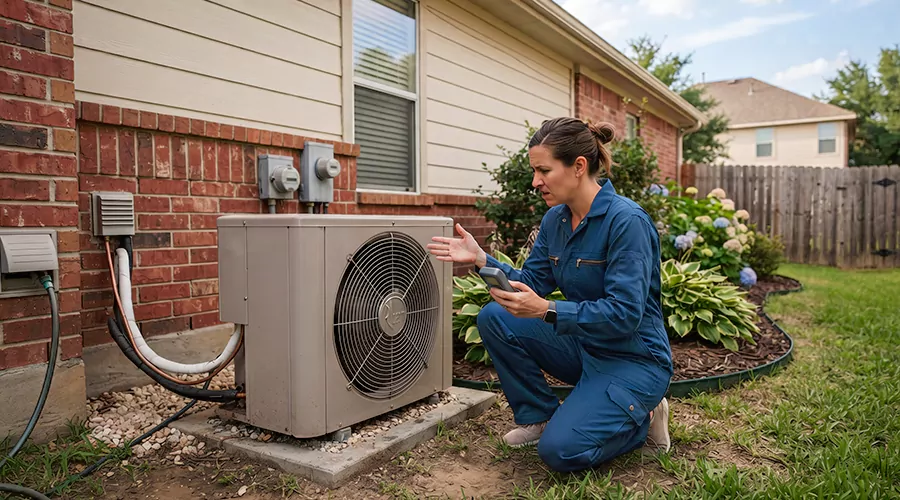
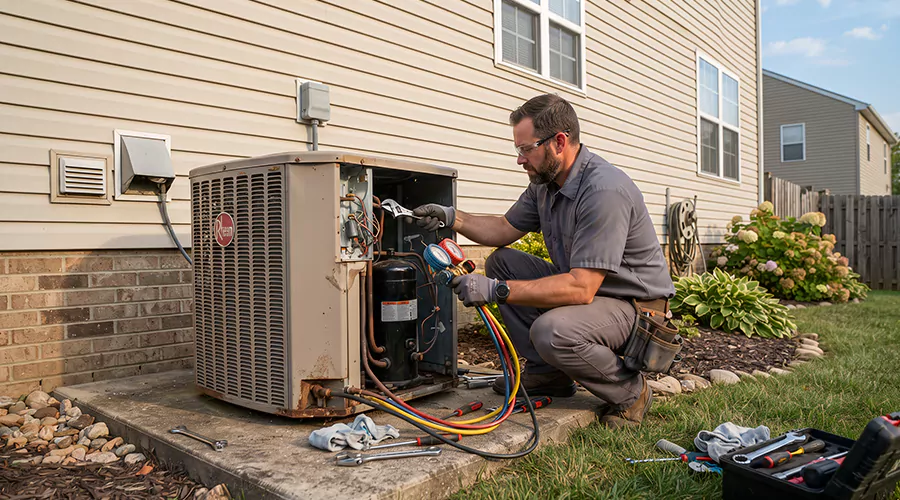
AC repair cost usually ranges from $172 to $664 for common residential repairs in 2026. Many homeowners pay around $417. Small electrical fixes can cost less while compressor or coil problems can push the total above $1,000.
The failed component has the biggest effect on the final bill. A service call can also add $75 to $200 before repair work begins.
Warm air does not automatically mean a major failure. A relatively inexpensive capacitor can create symptoms that resemble a bad compressor. Proper diagnosis should come before expensive part replacement.
What Is the Average AC Repair Cost in 2026?
A typical residential air conditioner repair costs about $172 to $664 in 2026. The national average is close to $417 for common repairs. Minor electrical problems can stay below $300. Refrigerant leaks or major component failures can raise the bill well beyond the normal range.
Repair Level Planning Table
| Repair level | Typical 2026 cost |
|---|---|
| Diagnostic service call | $75 to $200 |
| Minor electrical repair | $120 to $400 |
| Thermostat replacement | $60 to $440 |
| Capacitor replacement | $120 to $475 |
| Circuit board replacement | $150 to $700 |
| Blower repair | $150+ |
| Blower motor replacement | $250 to $800 |
| Refrigerant leak repair | $225 to $1,600 |
| Evaporator coil replacement | $600 to $2,000 |
| Compressor replacement | $1,200 to $2,800 |
| Condenser replacement | $900 to $4,000 |
- The air conditioner repair cost should therefore be compared by failed part rather than by one national average.
- A $200 repair and a $2,000 repair can begin with similar symptoms.
- That makes diagnosis especially important.
Why Does AC Repair Pricing Vary So Much?
Repair pricing changes because one cooling symptom can come from several different components. Equipment accessibility also changes labor time. System age can affect part availability. Summer demand can increase service rates because technicians are handling more emergency cooling calls.
- A standard service visit often begins with diagnosis.
- That fee commonly falls between $75 and $200.
- Emergency work can cost more.
- After-hours labor can reach about $250 per hour in some markets.
- Equipment location also matters.
- An outdoor condenser with clear access is easier to service.
- An air handler inside a tight attic can require more labor.
- Parts create another major difference.
- A failed capacitor is relatively inexpensive.
- A damaged compressor is one of the most expensive AC failures.
- The symptom alone does not tell you which repair price applies.
How Much Do Common AC Repairs Cost?
Common AC repairs range from about $120 for a smaller electrical problem to several thousand dollars for a major sealed-system component. Capacitors and thermostats usually stay toward the lower end. Refrigerant leaks sit in the middle. Compressor or condenser work can approach replacement-level pricing.
AC Capacitor Replacement
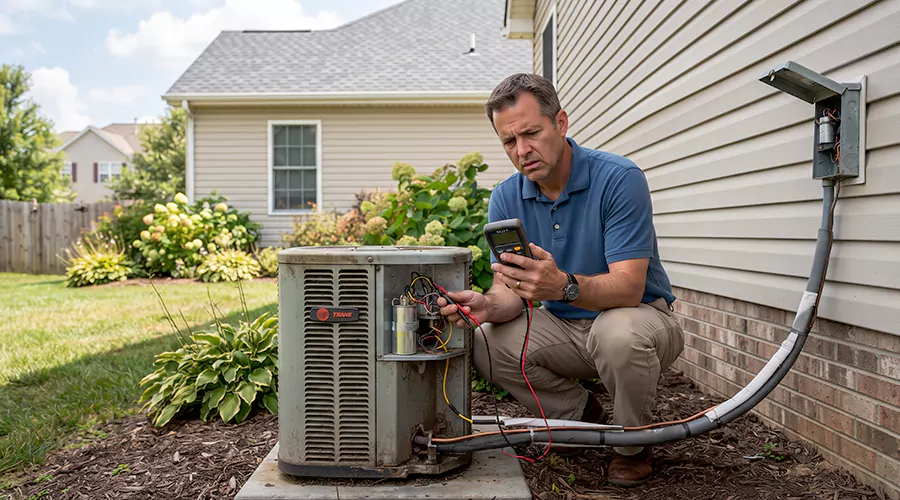
Professional capacitor replacement usually costs about $120 to $475, while current 2026 pricing often places a straightforward replacement near $200 to $400. The capacitor itself is usually inexpensive, with most of the bill coming from diagnosis and labor. A failed capacitor can prevent the compressor or outdoor fan from starting, making it an important part to test before assuming a motor has failed.
Circuit Board Replacement
An AC circuit board generally costs about $150 to $700 to replace. Control boards manage several electrical functions, and a board problem can stop the equipment from responding even when major mechanical parts remain healthy.
Blower Motor Repair
Simple blower work can begin near $150, while complete blower motor replacement often costs about $250 to $800. High-end motors can reach $2,000. Weak airflow can come from a motor problem, but a severely dirty filter can create a similar symptom. Airflow should therefore be checked before the motor is condemned.
Refrigerant Leak Repair
Leak detection and repair generally costs about $225 to $1,600, with the final price depending heavily on where the leak occurs. An accessible connection may be relatively simple to repair, while a leak inside an evaporator coil can create a more expensive problem. Additional refrigerant may also increase the total cost.
Evaporator Coil Replacement
Evaporator coil replacement commonly costs about $600 to $2,000, with labor representing a large part of the total because the refrigerant circuit must be opened. The system then needs proper evacuation and charging before it can return to normal operation.
Compressor Replacement
Compressor replacement commonly falls between $1,200 and $2,800, making the compressor one of the most expensive components in a central AC system. At this price level, the age of the equipment becomes especially important. A major compressor quote should usually be compared with the cost of replacing the entire AC system.
What Does Central AC Repair Usually Cost?
Central AC systems can produce higher repair bills than small room units because they use larger motors and sealed refrigerant components. Common central repairs can still remain within a few hundred dollars. Compressor or coil failures can push the project into four figures.
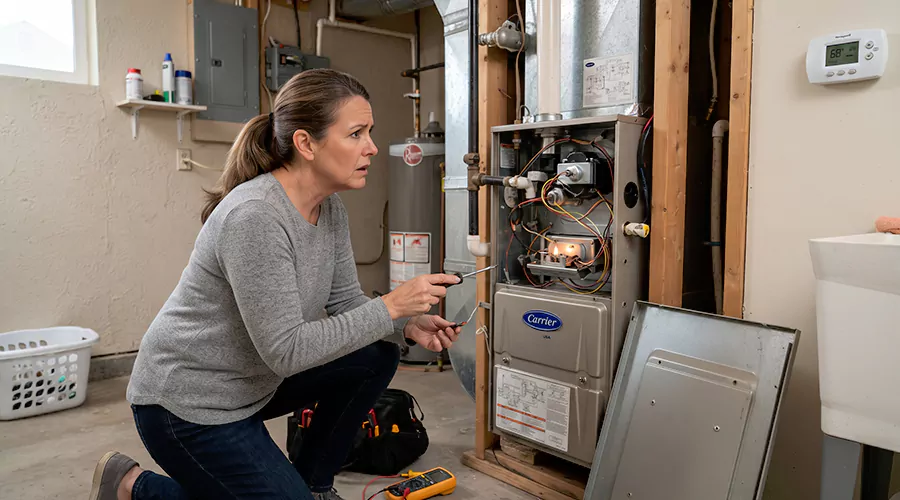
Central AC repair should start with a diagnosis rather than a list of possible replacement parts:
- The outdoor condenser is only one part of the system.
- The indoor evaporator coil also affects cooling.
- The blower moves conditioned air through the house.
- The thermostat controls the operating request.
- A problem with any of these areas can make the home feel warm.
- The service technician should identify which part is failing.
- That prevents replacing a major component when the actual problem is electrical or airflow related.
How Does an AC Problem Become More Expensive?
AC problems can progress when a developing fault continues through heavy cooling cycles. A weak electrical component can eventually stop working completely. Poor airflow can contribute to coil freezing. A refrigerant leak can reduce cooling capacity until the system runs for long periods without reaching the thermostat setting.
Problem Progression Table
| Stage | What you notice | Possible issue | Typical cost |
|---|---|---|---|
| Early | Slight startup hesitation | Capacitor | $120 to $475 |
| Developing | Weak airflow | Filter or blower issue | $0 to $800 |
| Cooling decline | Longer run times | Refrigerant problem | $225 to $1,600 |
| Severe | Ice forms on indoor coil | Airflow or refrigerant fault | Diagnosis needed |
| Major | Compressor will not operate | Compressor failure | $1,200 to $2,800 |
| End stage | Several costly parts are failing | Replacement comparison | Several thousand dollars |
- An inexpensive symptom deserves attention before it becomes a complete failure.
- That does not mean every unusual sound will turn into a major repair.
- It means changes in normal operation should not be ignored for months.
What Are the Signs Your AC Needs Repair?
An air conditioner usually gives some warning before complete cooling failure. Weak airflow and longer cycles are common signs. Warm supply air also deserves attention. New sounds can point toward electrical or mechanical trouble. Water around the indoor equipment can indicate a drainage problem.
10 Warning Signs of AC Trouble
- The AC blows air that is not cold.
- Cooling cycles become much longer than normal.
- The system starts and stops repeatedly.
- Airflow becomes weak at several registers.
- The outdoor unit develops a strong humming sound.
- Water appears around the air handler.
- Ice forms near the indoor coil.
- A breaker trips during cooling.
- The thermostat setting is never reached.
- Electricity use rises while cooling gets worse.
A single symptom does not identify the failed component because several problems can create warm air or weak airflow. The pattern becomes more useful when combined with electrical and temperature testing.
What Safe DIY Check Can You Do Before Paying for Repair?
A homeowner can perform a safe five-minute check without opening electrical panels. Confirm the thermostat setting first. Check the air filter next. Observe airflow at several registers. Look for visible water near the indoor equipment. Then observe whether the outdoor unit starts when cooling is requested.
DIY Checklist
- Set the thermostat to Cool.
- Lower the target temperature about 5°F below the current room temperature.
- Wait five minutes.
- Check whether the indoor blower starts.
- Walk to several supply registers.
- Compare the airflow.
- Inspect the filter.
- Replace it if the surface is heavily restricted.
- Next look around the indoor equipment for water.
- Observe the outdoor condenser from a safe distance.
- Listen for normal startup.
Do not remove the condenser electrical panel. Do not touch a capacitor. Do not repeatedly reset a breaker that trips again. These observations can help describe the problem without creating another repair.
When Should You Call a Professional?
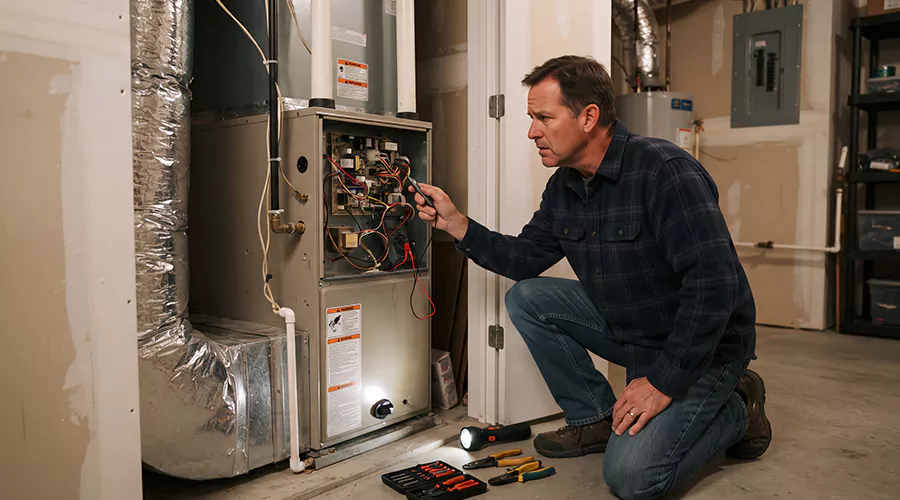
Professional diagnosis is appropriate when basic thermostat and filter checks do not restore normal cooling. Repeated breaker trips require professional attention. Persistent coil freezing also needs diagnosis. Refrigerant work should be handled by technicians who meet federal certification requirements for covered stationary air-conditioning service.
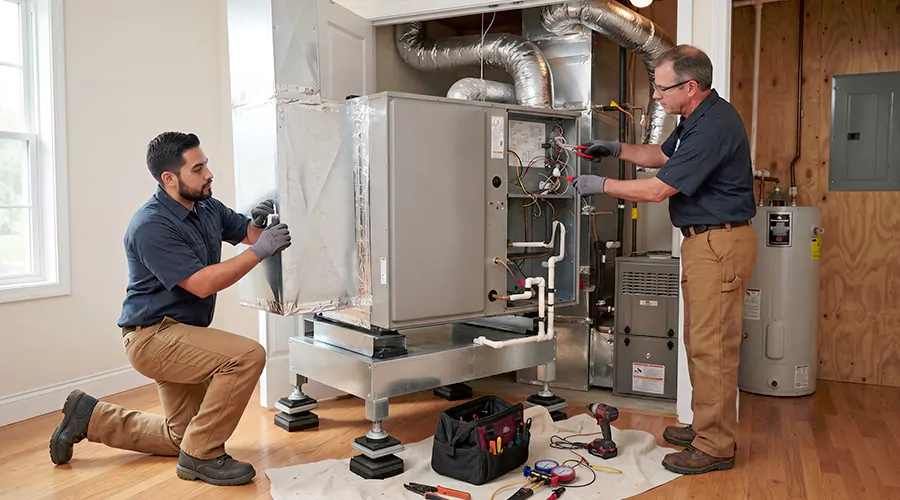
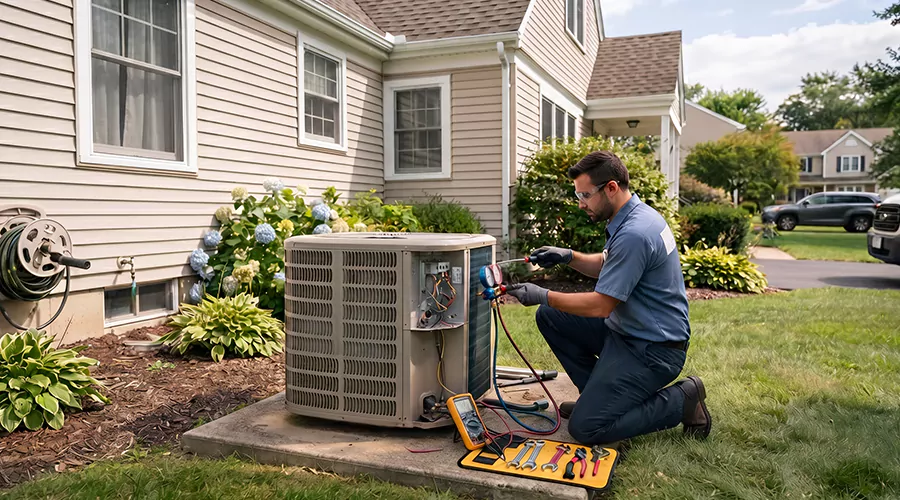
Residential air conditioning repair becomes especially important when electrical equipment behaves abnormally. Call when the breaker repeatedly trips, the outdoor unit hums without starting, or ice keeps returning after the filter has been checked. A technician can test the capacitor, measure motor current, and use system temperatures as diagnostic clues. Refrigerant pressures can also be evaluated when appropriate. The diagnosis should identify the failed component, so ask what measurement confirmed the problem. That question becomes especially important before approving a four-figure repair.
Should You Repair or Replace an Older AC?
Repair usually makes sense when the problem is relatively small and the rest of the system remains in good condition. Replacement deserves closer consideration when an older AC needs a compressor or condenser. Frequent recent repairs can also change the financial decision.
Suppose a 12-year-old system needs a $250 capacitor. Repair can still make financial sense. Now suppose the same unit needs a $2,500 compressor. That decision deserves a replacement comparison because age should not be used alone. Repair history, equipment condition, and warranty coverage also matter. A compressor covered under a parts warranty can leave the homeowner paying mainly for labor, which can make repair more attractive. Compare installed costs, and do not compare a professional repair quote with equipment-only pricing found online.
Can Emergency AC Repair Cost More?
Emergency service often costs more because the appointment occurs outside standard business hours. A normal diagnostic visit may cost $75 to $200. After-hours labor can reach about $250 per hour depending on the market. The actual repair part is normally added to that charge.
Emergency service can make sense during dangerous heat or when the system is creating an electrical problem. However, not every cooling problem requires an after-hours visit. A slightly warm bedroom can often wait until normal service hours, while repeated breaker trips deserve more caution. Water leaking near electrical equipment also deserves prompt attention. If you can safely shut the system down, doing so may help prevent additional damage while waiting for a professional diagnosis.
How Can You Reduce Future AC Repair Costs?
Preventive maintenance cannot stop every component from failing. It can reduce problems caused by restricted airflow or poor drainage. Regular filter checks are inexpensive. Seasonal inspections can also identify weak electrical components before peak cooling demand turns them into a complete no-cooling failure.
Inspect the filter during periods of heavy use and replace it before it becomes severely clogged. Keep loose debris away from the outdoor condenser, watch for water near the air handler, and pay attention to new startup sounds. Schedule cooling maintenance before peak summer demand when possible. A standard annual tune-up can cost about $80 to $200 depending on the service scope, which is relatively small compared with a $1,200 compressor problem. Maintenance cannot guarantee that a compressor will not fail, but it can help identify abnormal operating conditions earlier. Early diagnosis is usually easier to budget than an emergency failure.
Conclusion
AC repair cost commonly falls between $172 and $664 in 2026 while major failures can exceed $1,000. The failed component and service timing have the biggest effect on price. Check the thermostat and filter before assuming the system needs an expensive part. Record new sounds or airflow changes early. This week, observe one full cooling cycle so you know what normal operation looks like.
Frequently Asked Questions
A diagnostic service call commonly costs about $75 to $200 in 2026. Repair parts and additional labor can be added after the problem is identified.
It can be when the system is relatively young and otherwise healthy. Older equipment with repeated failures deserves a replacement comparison before a major repair is approved.
Professional capacitor replacement commonly costs about $120 to $475. Many straightforward 2026 replacements fall around $200 to $400.
Leak detection and repair commonly ranges from $225 to $1,600. The location of the leak has a major effect on labor and parts.
A high quote can result from an expensive component or difficult access. Refrigerant work can also increase labor. Ask which part failed and what testing confirmed the diagnosis.
Basic filter replacement and thermostat checks are reasonable homeowner tasks. Electrical repairs or refrigerant work should be left to qualified professionals because both involve significant safety risks.